
An electric arc is the release of energy in the form of intense heat and light and in some cases explosive pressure and sound waves. During the event, a strong electrical discharge occurs through air, where the voltage ionizes the air so that it becomes electrically conductive. The flowing current heats the air to several thousand degrees. The temperature can reach 10–20 thousand degrees Celsius. Comparatively, the temperature of the sun’s surface is about 5,500 degrees Celsius.
An arc flash in a high voltage installation is an undesirable event. The cause may be a technical error, but most often it is caused by a human error. An arc usually occurs in connection with a short circuit and then releases enormous amounts of energy. For example, copper expands 67,000 times when it is converted from solid form to gas. When the metal is gassed, a strong pressure wave occurs that can hit anyone nearby.
The most serious accidents related to arc flash occur from a short circuit, but arc flash can also occur from switching or breaking electrical circuits under load.
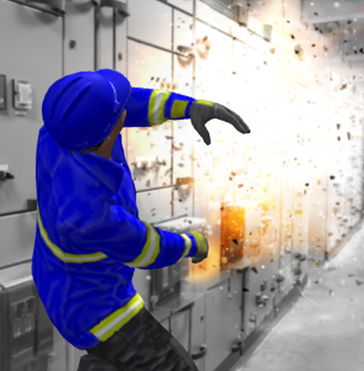
- Anyone affected by an electric arc often suffers severe burns. The burns on the skin depend on exposure time and temperature, i.e. the energy that hits the skin per unit of time.
- To calculate the potential damage of an electric arc, the concept of incident energy is used. Incident energy is specified in the unit cal/cm2.
- Incident energy is calculated with parameters such as current, time and distance to the arc.
- If there is no arc flash risk assessment carried out on the electrical installation and no calculation on the amount of incident energy in case of an arc flash, it is difficult to make a correct risk assessment before the work.