
This includes every way in which information is passed or exchanged between persons i.e. by spoken word (including telephone, personal radio, and person to person), in writing (including fax), and visually (including visual display units, annunciator panels, lights etc.).
Before any work activity starts, the PCEI shall be informed of the intended work.
All necessary information such as network arrangements, the status of switchgear (on, off, earthed), and the position of safety devices, to permit safe operation of the electrical installation shall be transmitted by a notification.
Where it is necessary to use other means of transmitting information, for example radio signals, computers, lights, etc. such means shall only be used when precautions are taken and are in place to ensure that the information path is reliable and that no misunderstandings can arise or false signals are given.
All notifications shall include the name and, if necessary, the location of the person providing the information.
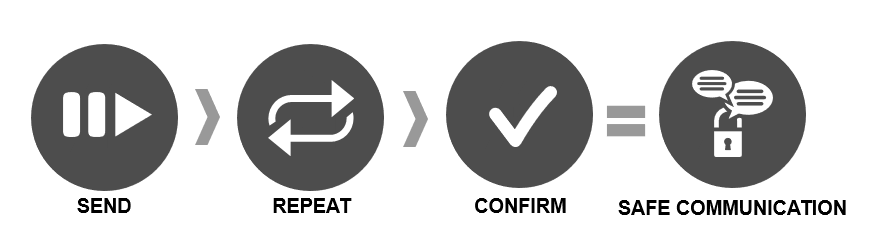
To avoid errors when information is transmitted verbally the recipient shall repeat the information back to the sender, who shall confirm it has been correctly received and understood.
Permission to start work and reenergizing of the electrical installation on completion of work which is controlled by signals or pre-arranged understanding after an agreed interval of time shall not be permitted.
The cornerstones of safe communication are the three steps; Send – Repeat – Confirm.
It is essential that all communication takes place in one common language and uses a terminology that is understood by everyone involved.